The Full Face Yoga Masterclass
Your face is
living architecture.
Learn how to work with it.
A guided two-hour recorded masterclass to activate, lengthen and rebalance the muscles of your face and neck, supporting a more lifted, defined and rested appearance, naturally.
With Uma Ghosh
Precision. Presence. Practice.
As featured in






More than skin deep
You’ve been caring for your skin.
But your face is more than skin.
You can use beautiful products, protect your skin and stay consistent, yet still notice heavier-looking eyes, flatter cheeks or a softer jawline.
You may also feel tension around your brow or jaw, notice puffiness, or find that one side of your face moves differently from the other. Skincare is one part of the picture. How your face moves and holds tension is another.
In this masterclass, you will learn how to work with the muscles of your face and neck: which areas to activate, which to relax, and how to practise with control.
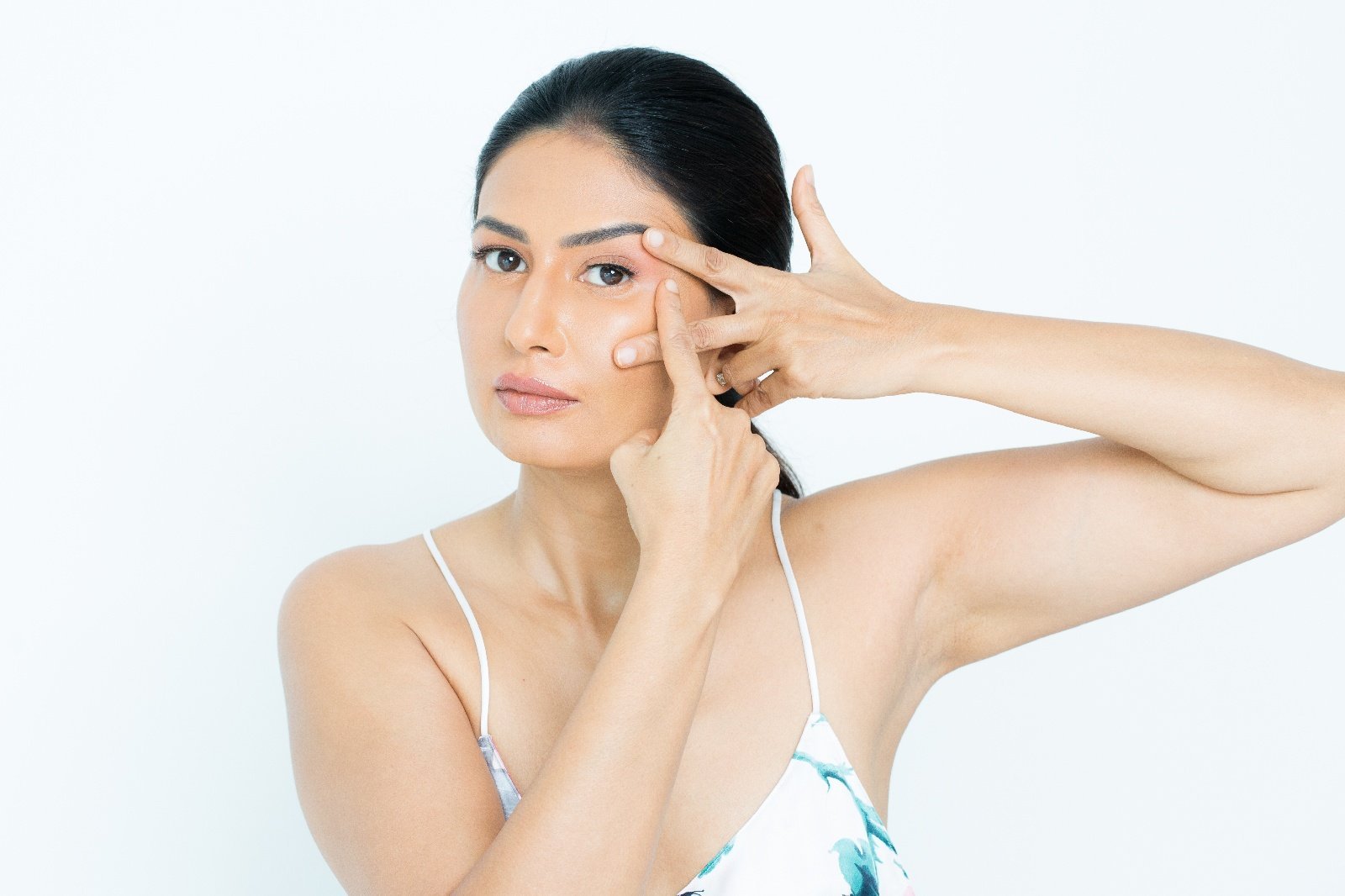
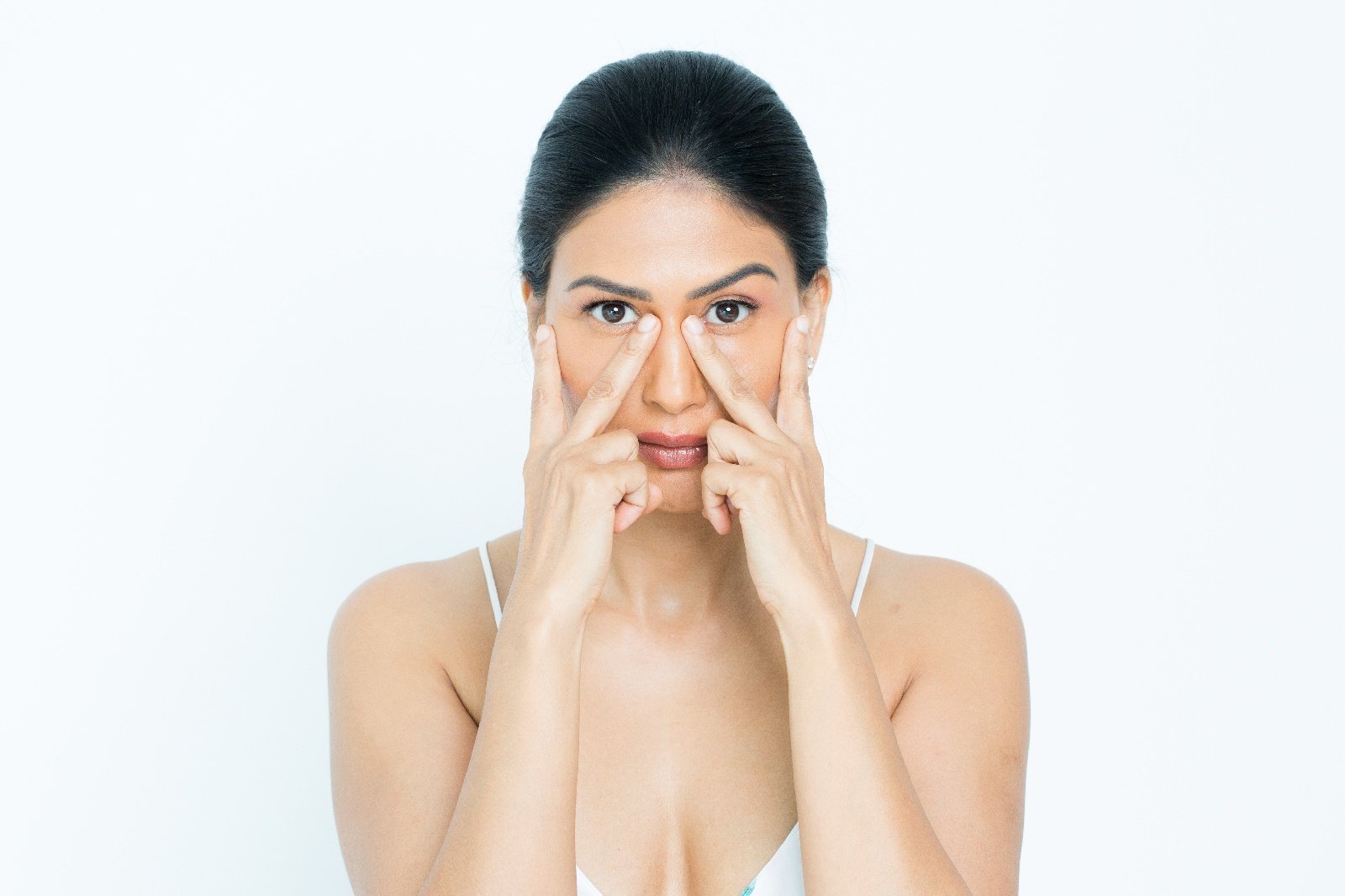
Eyes
Cheeks
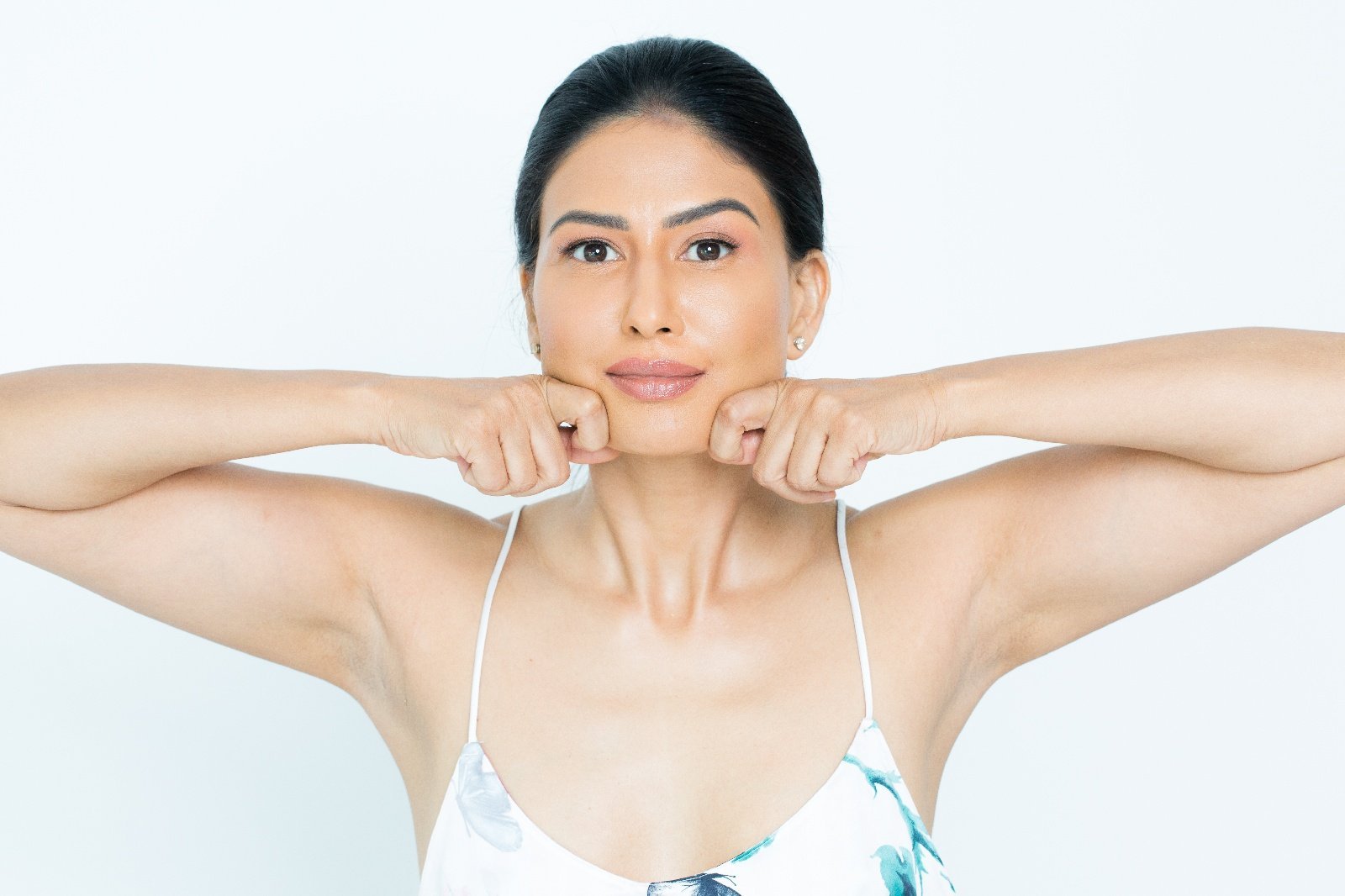
Jaw
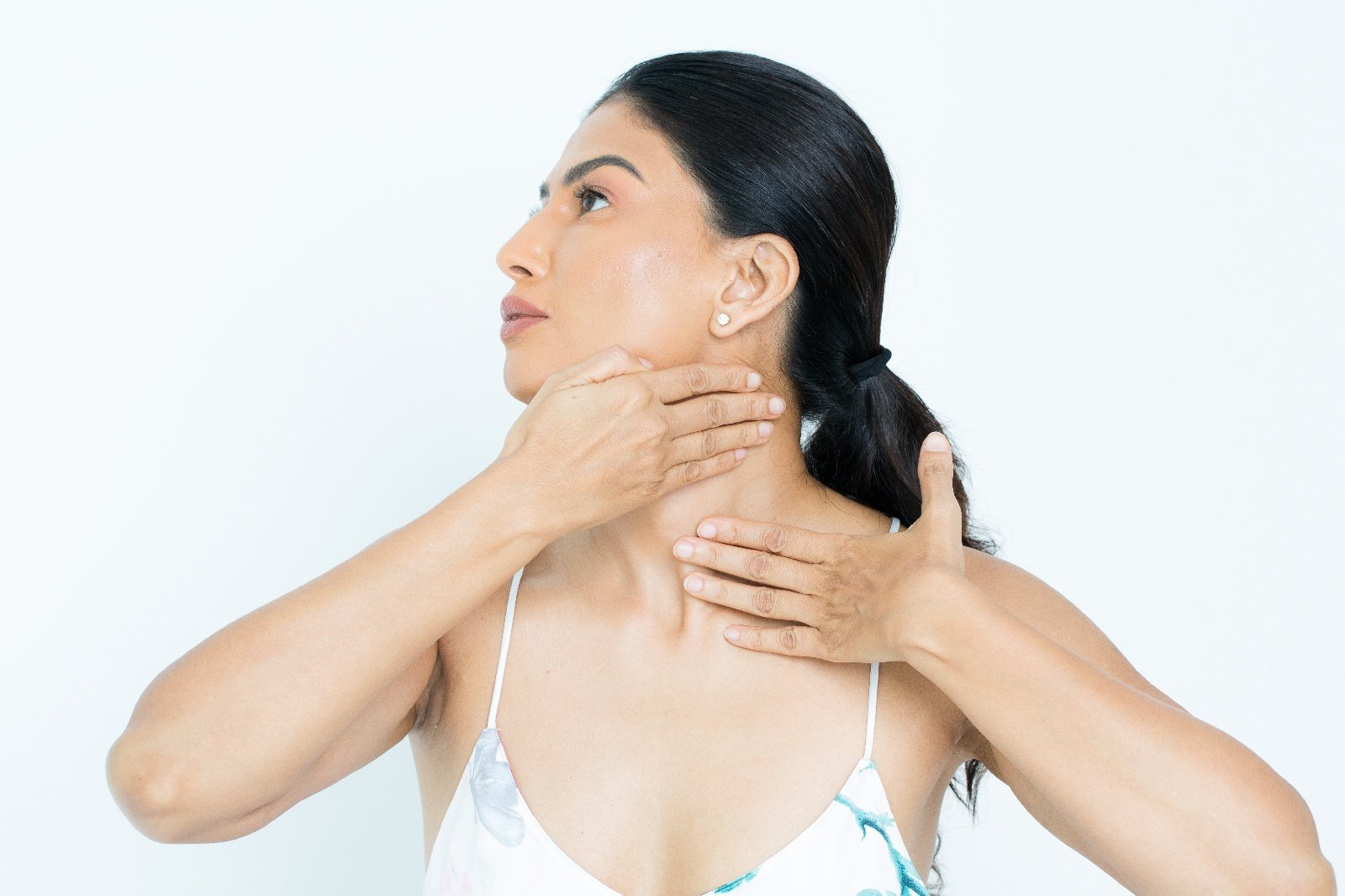
Neck
Understand your facial architecture
Your face ages
in layers.
Here is where Face Yoga fits.
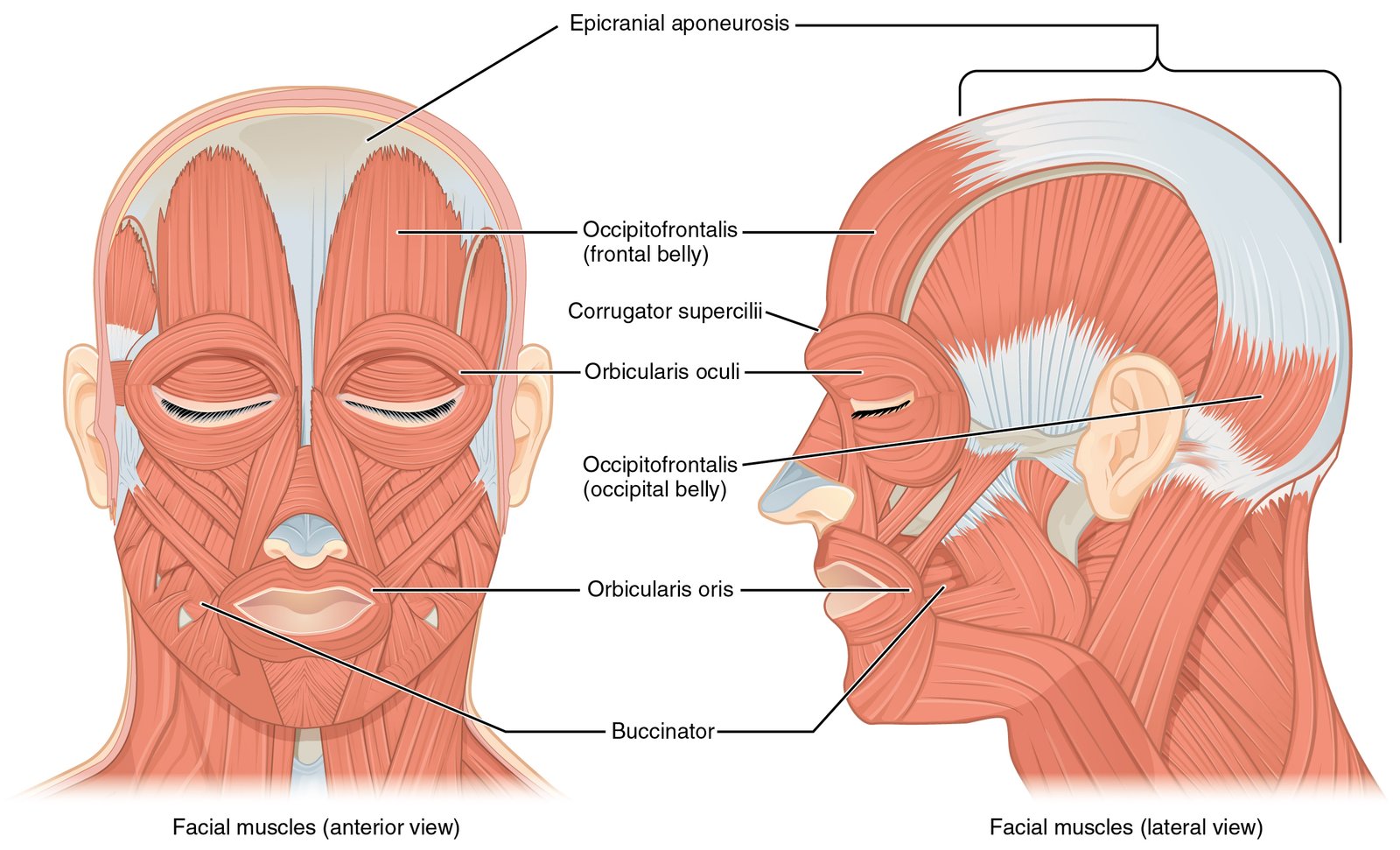
Skin, fat, connective tissue, muscle and bone all help shape your face. They change in different ways. Face Yoga focuses on the muscles and movement patterns you can learn to use with greater control.
Skin
Skin becomes thinner and less elastic over time. Products and sun protection care for this surface; facial movement is a different part of the picture.
Fat compartments
Superficial and deep fat shape facial volume. Volume can decrease in some places and become more prominent in others. Face Yoga does not replace lost fat or remove it.
Our movement focus
Facial muscles
Face Yoga uses controlled movement to practise activation, relaxation and coordination. You learn where to work and where to release tension.
Fascia & retaining structures
Connective tissue and retaining ligaments support the face. Their changes are part of ageing; facial exercise does not reposition them.
Bone
The underlying skeleton remodels over time. Face Yoga cannot rebuild bone or change the structure of your face.
What this means for your practice
You do not need to memorise muscle names. Uma guides you through the movements, showing you where to feel the work, where to soften and how to avoid unnecessary strain. The aim is better movement and control, not exercising every area harder.
Less force. More precision.
How Uma guides
your practice.
The masterclass teaches four connected skills. Together, they help you practise with control instead of copying movements and hoping you are doing them correctly.
Release
We begin by softening tension in the brow, jaw and neck, so you can move into the practice with less gripping.
Activate
We use gentle, controlled resistance to engage the muscles we are working with. I show you how to feel the movement without tightening your whole face.
Coordinate
We explore what should move and what should stay relaxed. I help you notice when one side takes over and adjust your technique.

Integrate
We bring the movements together with your breath, neck alignment and posture. I guide you through a full-face practice you can return to with confidence.
Release
Activate
Coordinate
Integrate
Your face, your practice
Work with the
changes you see.
Every face is different. Explore what may be involved in each concern, and where the practice can offer support.
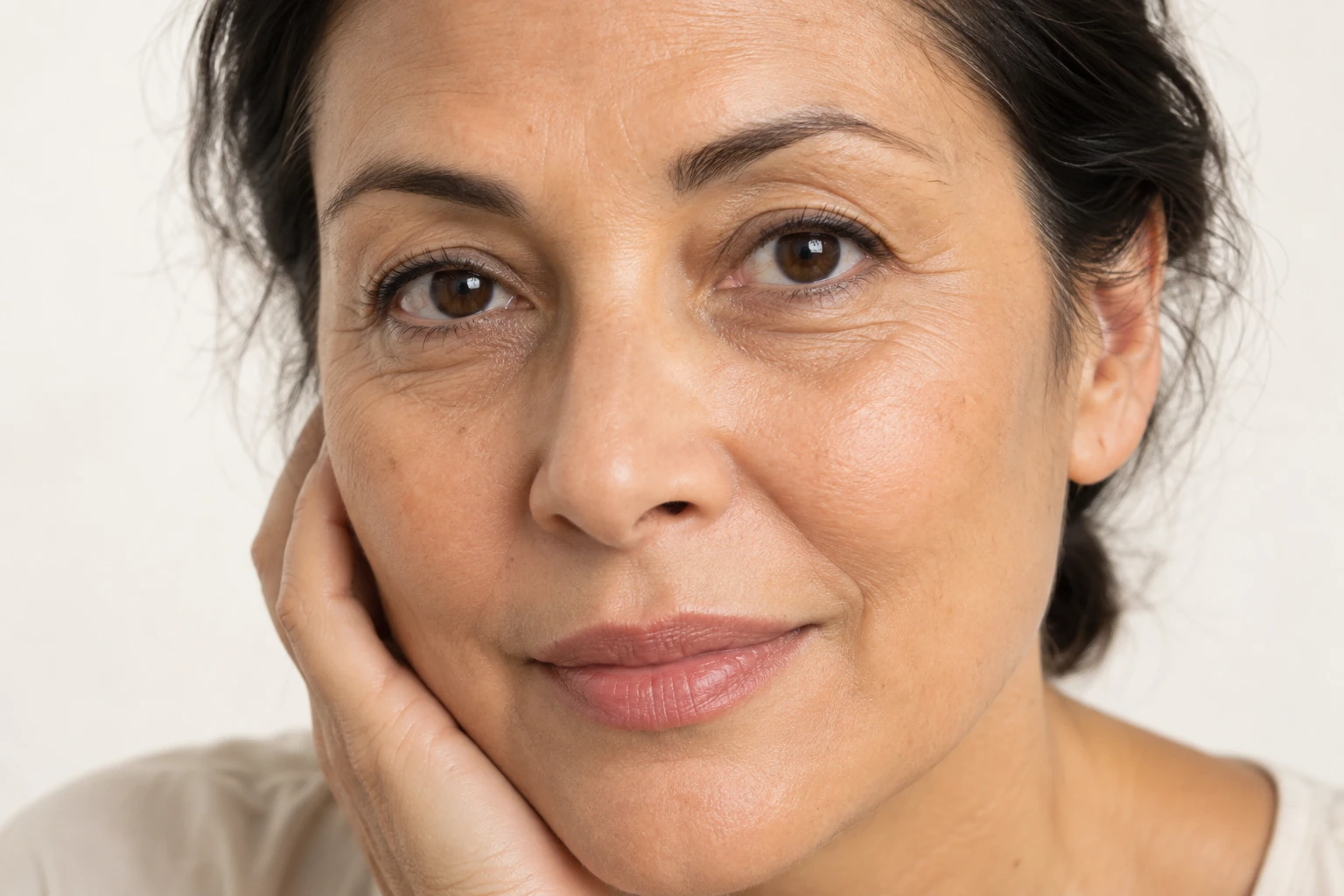
Heavy or tired-looking eyes
What may be involved
Tension around the eyes and forehead, screen habits, sleep and natural structural changes can all affect how rested your eyes look.
What the practice focuses on
Gentle eye-area control, brow awareness and release so the upper face can look more rested and open.

Flatter cheeks
What may be involved
Changes in skin and facial volume, together with how you use your cheek muscles, can affect how supported this area looks.
What the practice focuses on
Controlled activation of the cheek elevators to support a fuller, more energised appearance.
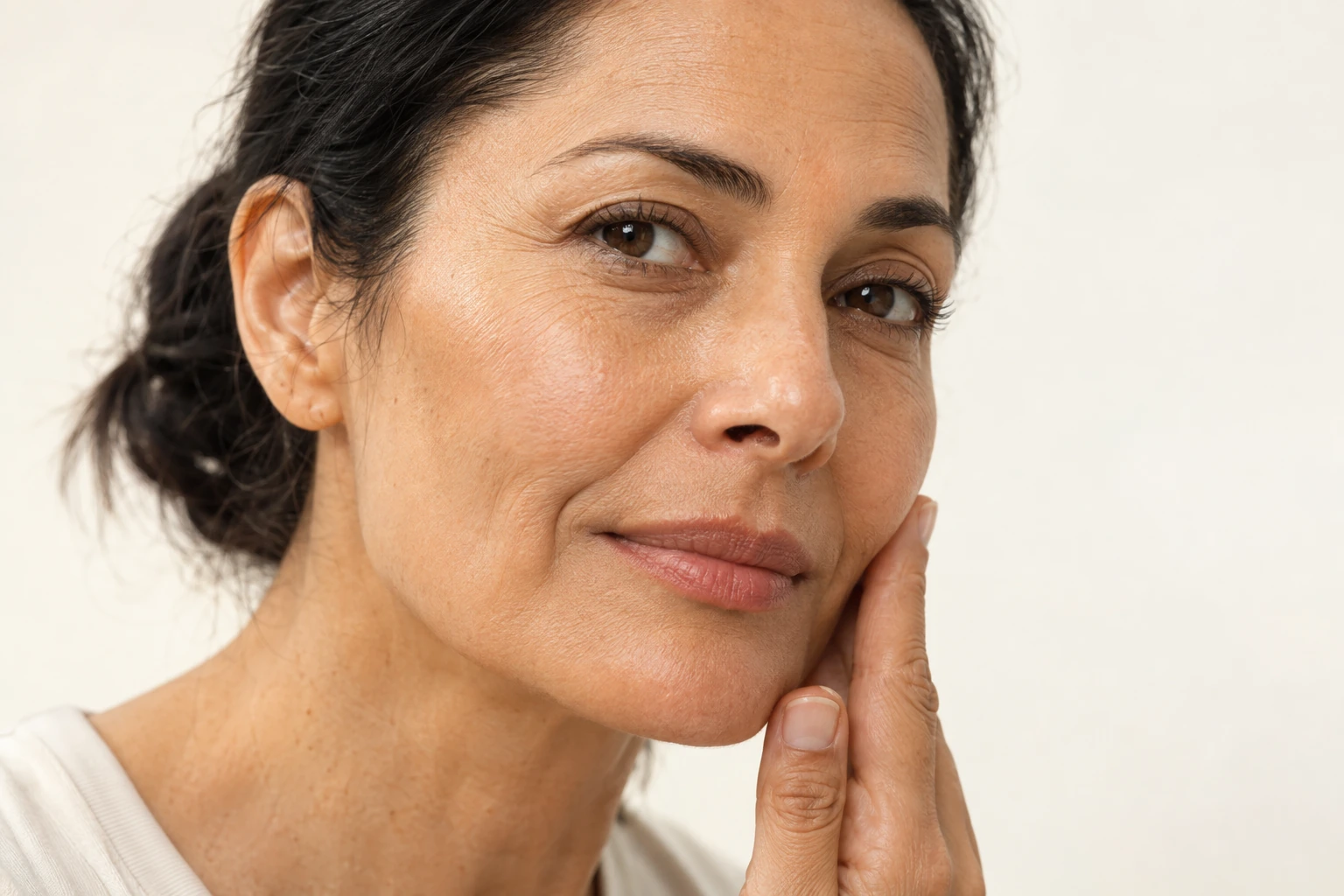
Smile lines & mouth heaviness
What may be involved
Skin, facial volume, supporting tissues and repeated movements all contribute to the appearance of the mouth area.
What the practice focuses on
Lip and cheek coordination, controlled resistance and release of downward-pulling tension.

A softer jawline & chin
What may be involved
Your lower-face shape reflects several factors, including skin, fat, bone, posture and the way your neck muscles work.
What the practice focuses on
Lower-face tone, tongue and chin awareness, neck length and posture, without claiming to remove fat.

Downturned mouth corners
What may be involved
Habitual expressions and the balance between muscles that lift and lower the mouth can influence how its corners sit.
What the practice focuses on
Selective activation around the lips and cheeks while reducing unnecessary downward pull.
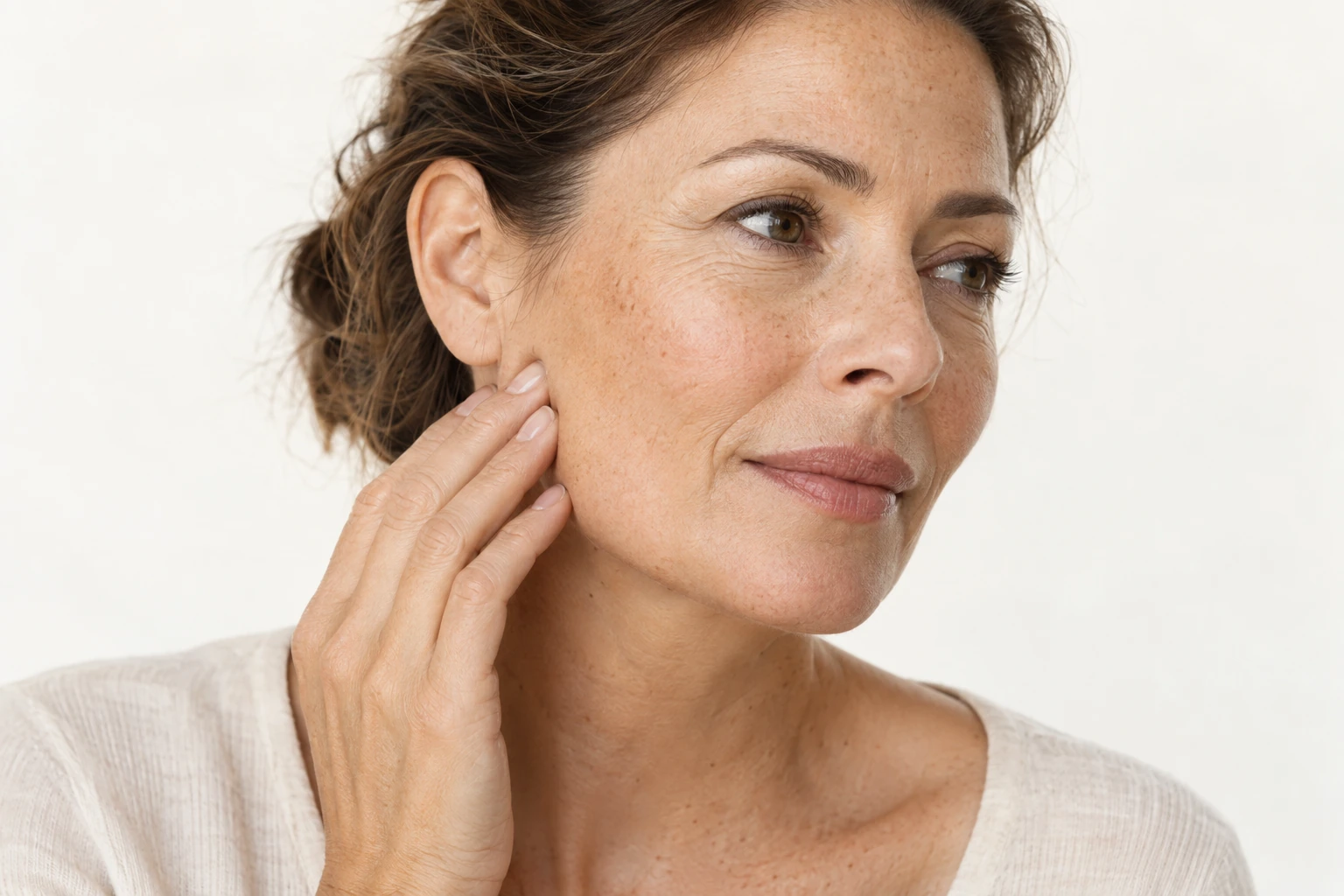
Jaw tension
What may be involved
Clenching and stress habits can leave the muscles around your jaw feeling overworked and tightly held.
What the practice focuses on
Relaxation and movement control rather than adding more force.
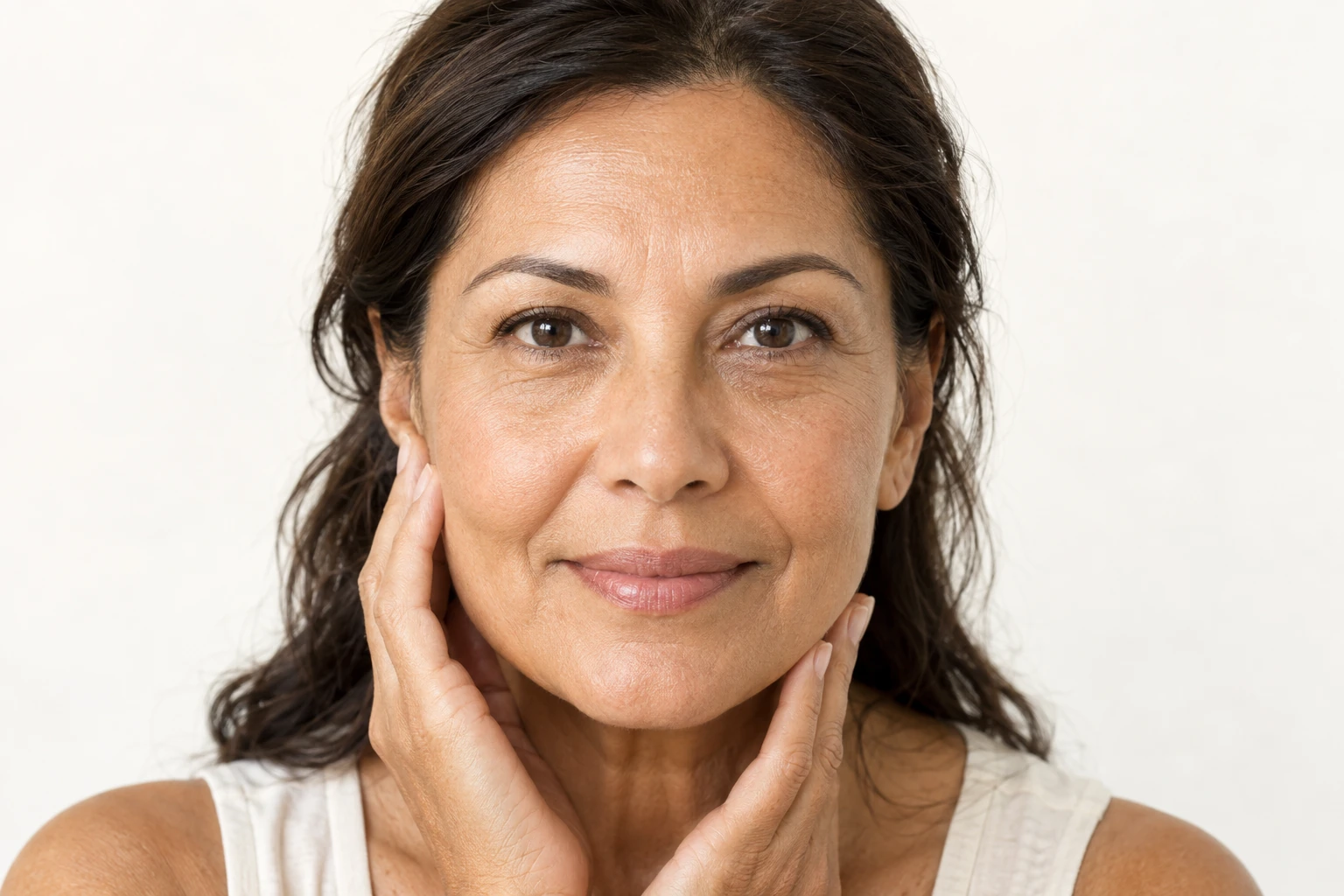
Facial asymmetry
What may be involved
Most faces are naturally asymmetrical. Chewing, expression habits and favouring one side can also affect how the face moves.
What the practice focuses on
Greater awareness and coordination. Structural symmetry is never promised.
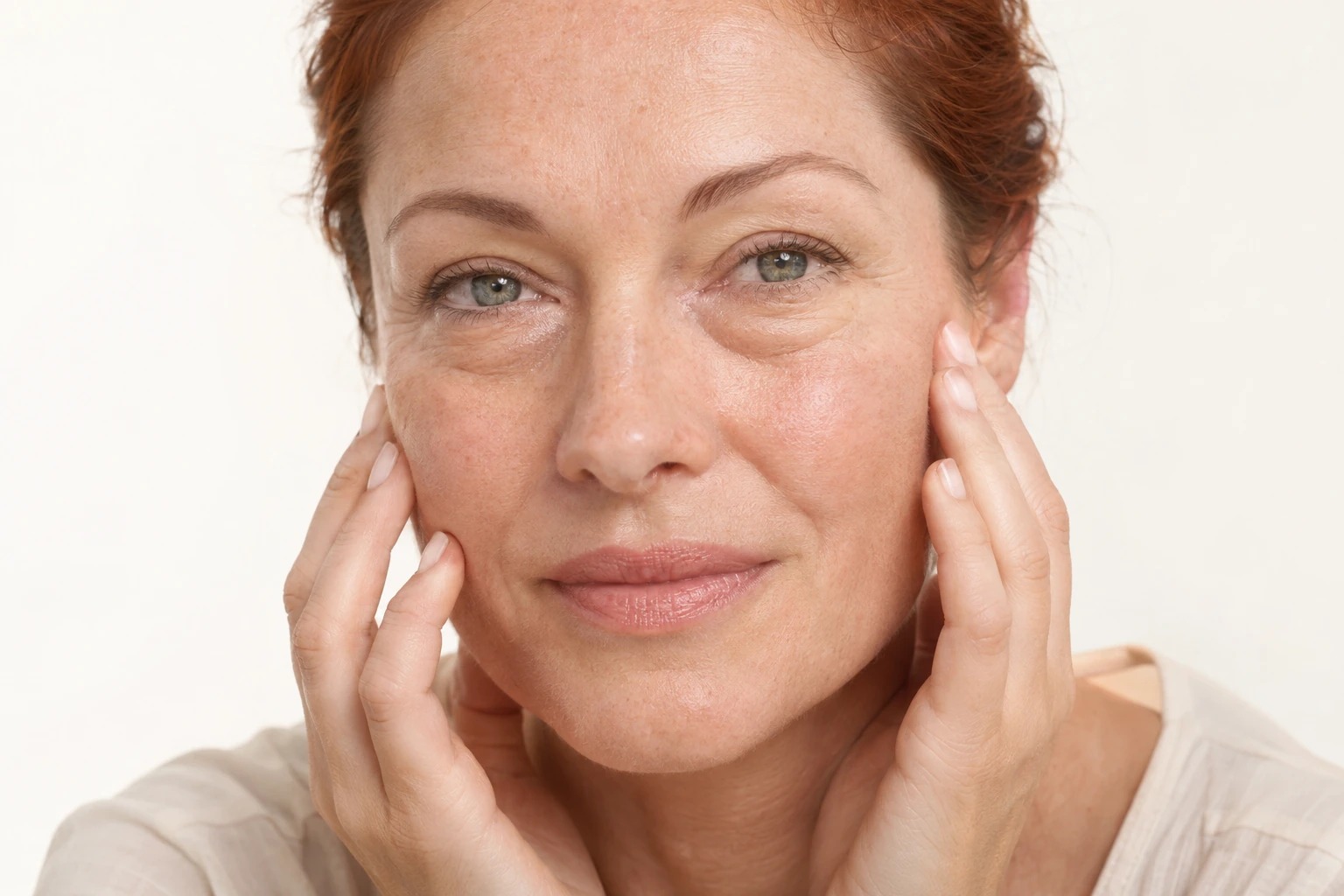
Temporary puffiness
What may be involved
Puffiness can fluctuate with sleep, salt, hormones, allergies, fluid shifts and activity.
What the practice focuses on
Breath, gentle movement and drainage-aware preparation to support a fresher appearance.
Learn the correct technique
Know exactly how
to do each movement.
A movement can look simple on screen and still be difficult to get right. Uma shows you how to position your hands, which muscles to engage and what should stay relaxed, so you can follow the practice without guessing.
You should feel controlled muscular work, never pain, aggressive pulling or strain.
Place your hands correctly.
Use your hands for support and counter-resistance, without dragging the skin.
Feel the right muscles working.
Learn where you should feel the movement and what should remain relaxed.
Adapt the effort to your face.
Understand how much effort is enough, when to relax and how to modify a movement for your own face.
A complete practice, from the shoulders up
Inside the
two-hour masterclass.
The recorded class takes you from preparation to a complete face-and-neck sequence. Follow Uma area by area, pause when you need to, and learn the technique before bringing the movements together.

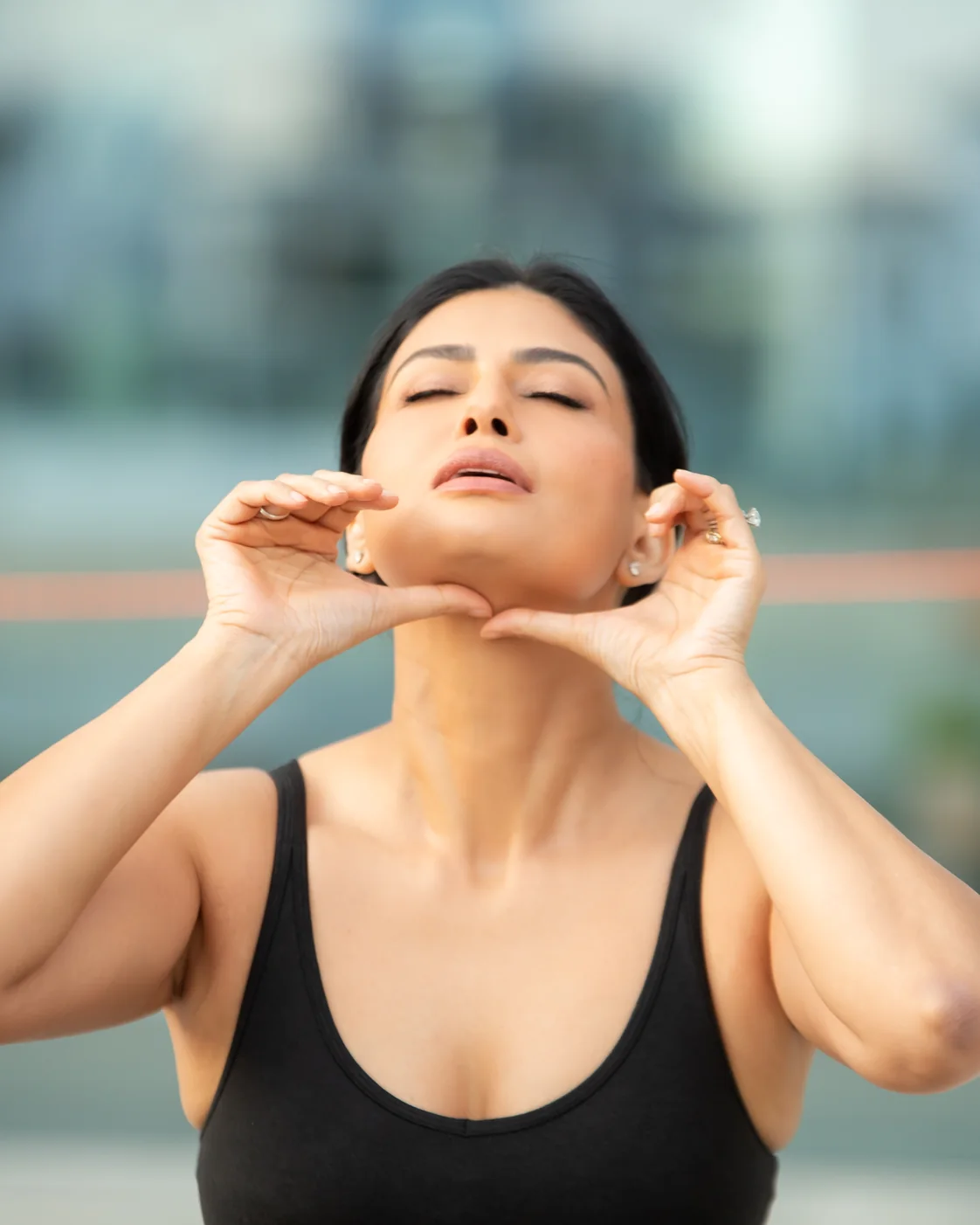

Foundation & alignment
Breath, shoulder release, neck length and head position before facial work begins.
Forehead & brow
Release habitual gripping and learn controlled upper-face movement.
Eyes
Gentle activation and support for a brighter, more open-looking eye area.
Cheeks & midface
Recruit the cheek muscles with precision and minimise compensation.
Lips & mouth
Improve movement awareness around the lips, smile and mouth corners.
Jaw & chin
Distinguish between areas that need tone and areas that need relaxation.
Neck & platysma
Connect the lower face to the neck and upper-body posture.
The full-face sequence
Combine the techniques into a repeatable practice.
Technique & modifications
Learn the common mistakes, corrections and ways to adapt the practice.
Your consistency plan
Know what to practise, how often and how to track subtle change.
US $39 · Pre-recorded · Beginner friendly
What to expect
What you may notice
with practice.
You may notice release and greater awareness during a session. Changes in appearance take consistent practice and vary from person to person.

After your practice
- A warmer, more awakened feeling in the face
- A jaw and brow that feel less tightly held
- Eyes that may look fresher or more open
- A temporary sense of definition or reduced puffiness
- A stronger connection between posture, breath and expression
With consistency
- Better awareness and control of facial movement
- More balanced activation and relaxation patterns
- A more toned or supported appearance in selected areas
- Potential improvement in cheek fullness and facial vitality
- A repeatable ritual that supports confidence and self-connection
There is no single timeline because no two faces, lifestyles or movement patterns are identical. Progress comes from precision first and consistency second.

Uma Ghosh · Your guide
“I don’t teach you to fight your face. I teach you to understand it.”
Entrepreneur · Educator · Global Holistic Beauty Mentor
I am the founder of The Uma Show and co-founder of Pro-Age Aesthetics Academy. After years in television and more than a decade immersed in holistic wellness, my work brings together natural beauty, movement, nourishment and daily ritual.
Now in my fifties, I know what it is to watch your face and body change. I do not believe in freezing expression or chasing a younger version of yourself. I believe in keeping the face mobile, supported, expressive and alive.
Face Yoga is one of the practices I return to because it lets me work with my own facial architecture. It is active, intentional and deeply empowering.
Uma
A practice that meets you where you are
This masterclass
is for you if…
- You want a natural, non-invasive way to care for your changing face.
- You notice heaviness, tension, reduced definition or loss of facial vitality.
- You have tried random videos but are unsure whether your form is correct.
- You want to understand the why behind each movement.
- You want a complete practice connecting the face, neck, breath and posture.
- You are ready to practise consistently and age powerfully while still looking like yourself.
This is not a promise
of perfection.
This class is not designed to erase every line, change your bone structure, remove facial fat or make you look like someone else.
It is for you if you want to understand your face, move it with greater precision and build a natural practice that supports how you look and feel.
The Full Face Yoga Masterclass
Start your guided
Face Yoga practice.
Two hours with Uma. Pre-recorded, so you can learn at your own pace.
$39USD
- Complete guided face-and-neck masterclass
- Clear hand placement, technique and modifications
- A full-face sequence to continue at home
Beginner friendly · No equipment required
A little more clarity
Your questions,
answered.
Do I need any Face Yoga experience?
No. The masterclass is beginner friendly and teaches foundations, form and modifications step by step.
Is this a live class?
No. This is a pre-recorded, two-hour course. You learn at your own pace rather than attending a scheduled live session.
How much time will I need after the class?
Once you understand the movements, you can build a focused practice of approximately 10 minutes and choose additional techniques for the areas you want to support.
When will I see results?
You may notice warmth, release, awareness or freshness after practice. Visible change is more individual and depends on correct technique, consistency, anatomy, lifestyle and time. No specific result or timeline can be guaranteed.
Can Face Yoga create more lines?
Aggressive or poorly controlled movement can reinforce unnecessary creasing. That is why the class teaches hand support, counter-resistance, isolation and relaxation. The aim is precise muscular work, not forceful repetition.
Will this remove jowls, a double chin or deep folds?
These concerns involve skin, fat, ligaments, bone, genetics and posture. Face Yoga cannot remove fat or reverse structural ageing, but it can support muscle tone, alignment, movement awareness and a more defined-looking appearance.
Is Face Yoga the same as face massage?
No. Face Yoga uses active movement, controlled contraction, lengthening and resistance. Face massage is primarily hands-on tissue work and relaxation. They complement one another, but each deserves correct technique and its own practice.
Can I practise after Botox, fillers, threads or facial treatment?
Follow the aftercare and waiting period given by the professional who performed your treatment. Do not begin new facial movements over a recently treated area until you have been cleared to do so.
Is there anyone who should not participate?
Do not practise through pain. If you have had recent facial, dental or neck surgery, an acute infection or skin flare, significant jaw pain, facial nerve symptoms, or a condition affected by facial movement, obtain appropriate clearance before beginning.
Do I need tools or skincare products?
No tools are required. Begin with clean hands and a clean face.
Age powerfully. Stay yourself.
Learn the movements.
Make the practice yours.
Join me for the Full Face Yoga Masterclass. Learn the technique, build your confidence and bring a guided face-and-neck practice into your routine.